
The defining feature of winter tires is their specialized rubber compound. Unlike summer tires, which harden in low temperatures, winter tires remain flexible, maintaining strong grip and control even in cold conditions. Summer tires, on the other hand, cannot generate adequate traction when temperatures drop — resulting in longer braking distances and an increased risk of skidding in corners. Even when there is no snow or ice on the road, it is strongly recommended to use winter tires whenever temperatures fall below 7°C (45°F). On wet or slippery surfaces, winter tires can reduce braking distances by up to 50% compared to summer tires.
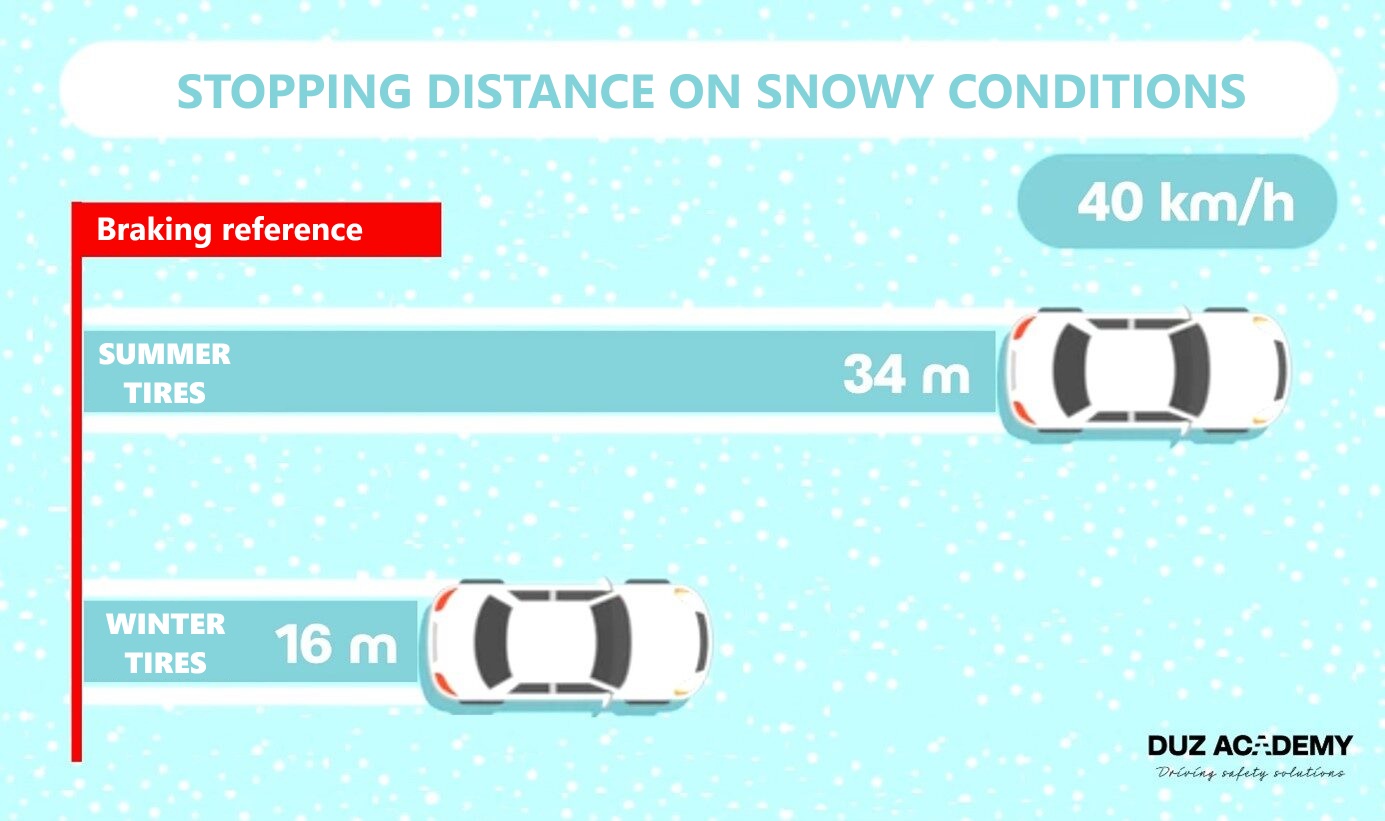
Stopping Distance on Snow: Summer Tires vs. Winter Tires
The performance gap between winter and summer tires on slippery surfaces is dramatic — and no amount of driver skill or vehicle quality can compensate for it. A common mistake is fitting winter tires only on the front wheels or only on the driven axle. Mixing two winter tires with two summer tires does not provide safe grip in any season. In fact, it disrupts the vehicle’s balance and significantly increases the risk of losing control.
To achieve full performance, winter tires must have sufficient tread depth. A new tire typically has 8–9 mm of tread, which gradually decreases as the tire wears. While many European countries set the legal minimum at 1.6 mm, we at DUZ Academy recommend replacing winter tires once the tread depth falls below 4.0 mm. Below this level, the tire’s ability to disperse water and slush is greatly reduced, increasing stopping distances and diminishing grip — especially on snow and ice.
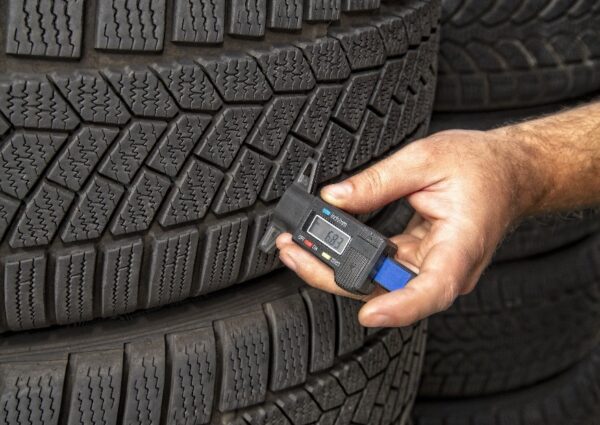
Tire Tread Depth Measurement
Using winter tires in winter and summer tires in summer not only improves driving safety but also makes economic sense.
By using the right tire at the right time, you extend tire life, maintain optimal performance, and ensure better fuel efficiency.
In many European countries, winter tires are mandatory during the winter season, particularly for passenger and commercial vehicles. While exact dates vary depending on local climate and legislation — typically between mid-November and mid-April — the purpose is the same: ensuring maximum safety for all road users. Even in regions where winter tires are not legally required, they remain one of the simplest and most effective ways to improve driving safety in cold weather.


